COURSE
HOLE1 PAR 4
388 YARDS
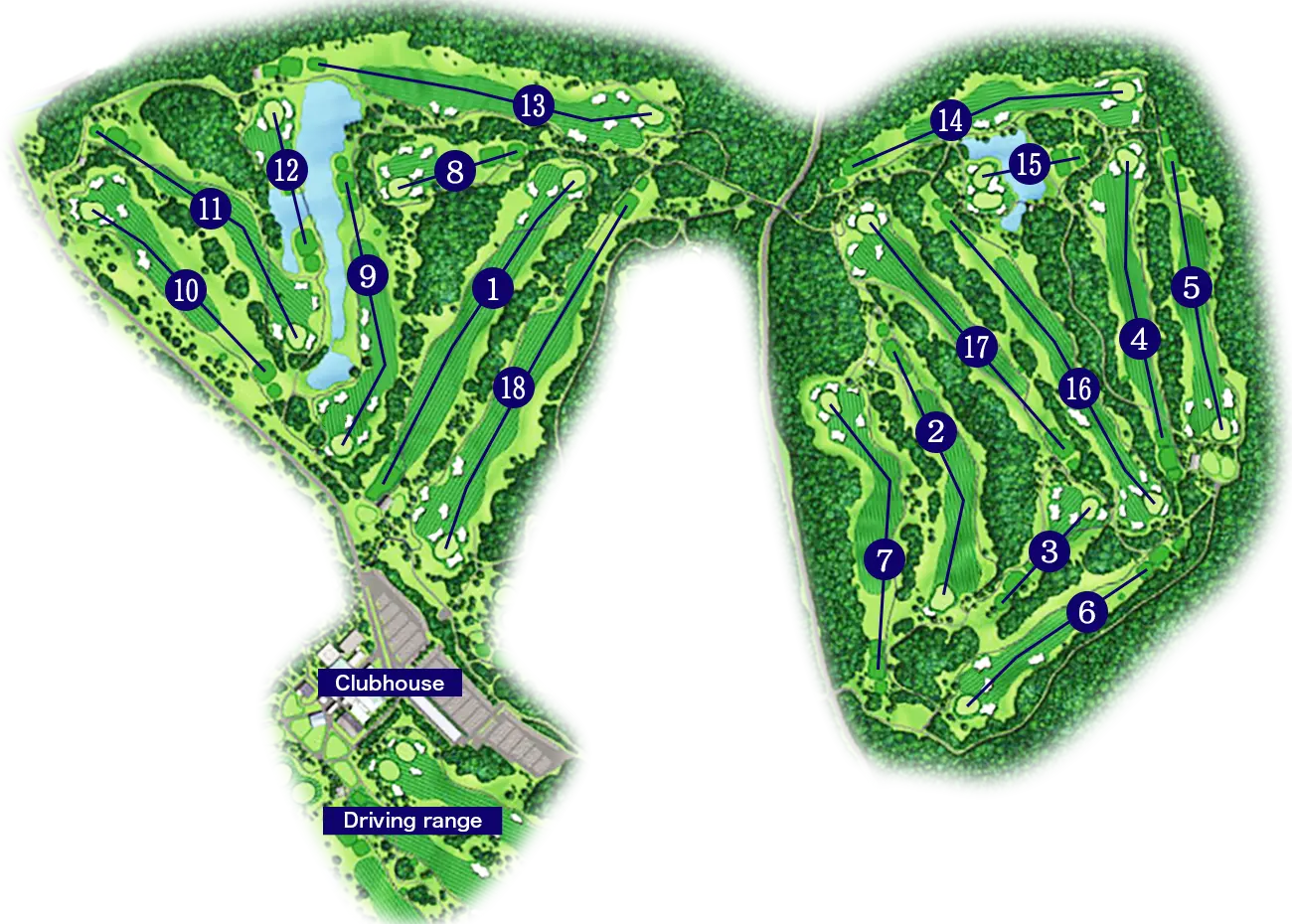
A straight par-4 with a clear view of the green. Aim your tee shot to the left of the fairway bunker visible on the right. The green is a two-tiered green that slopes down from the back right, so the difficulty varies significantly depending on the pin position.
HOLE2 PAR 5
517 YARDS
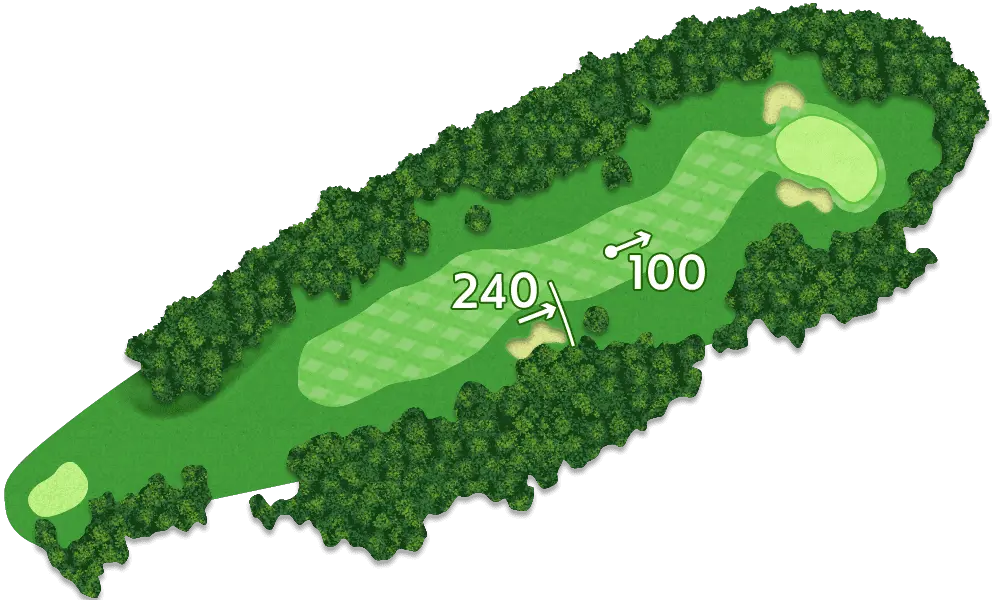
A par-5 that curves gently to the right. The fairway slopes to the left, so be careful not to hit the ball too far to the left. On your second shot, avoid the woods aproaching from the right and the two bunkers on the left.
HOLE3 PAR 3
195 YARDS
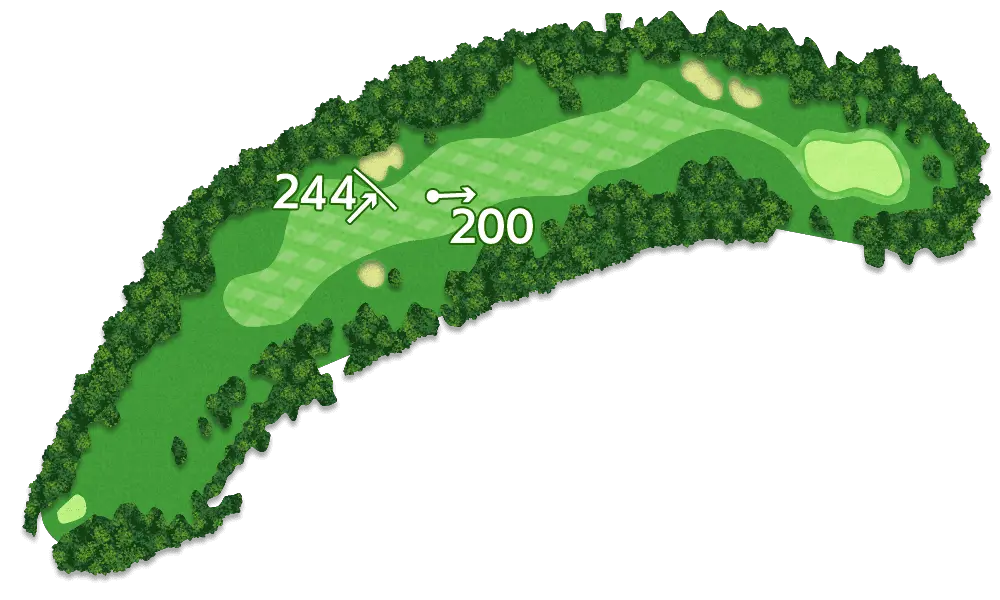
A flat par-3 surrounded by a pond. The green slopes from the back right toward the front left. If the pin is on the left, the ball is likely to end up in the pond on the left; conversely, if the pin is on the right, landing in the guard bunker on the right makes it difficult to get close to the pin.
HOLE4 PAR 4
387 YARDS
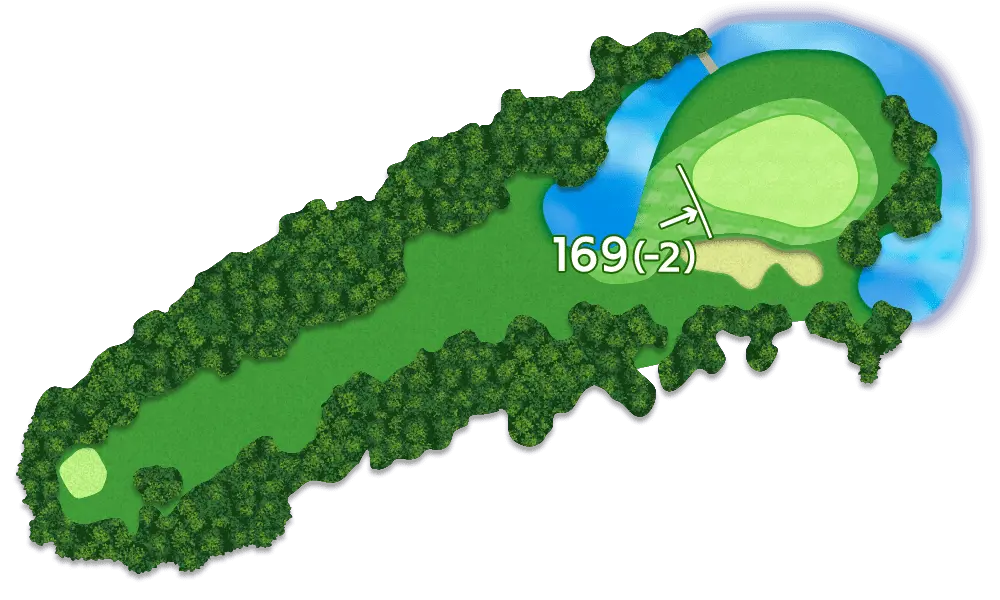
A par-4 where the green is visible straight ahead. The fairway slopes to the left, and there is a fairway bunker to the right near where the tee shot lands. The key is whether you can hit your tee shot firmly toward the right side of the fairway.
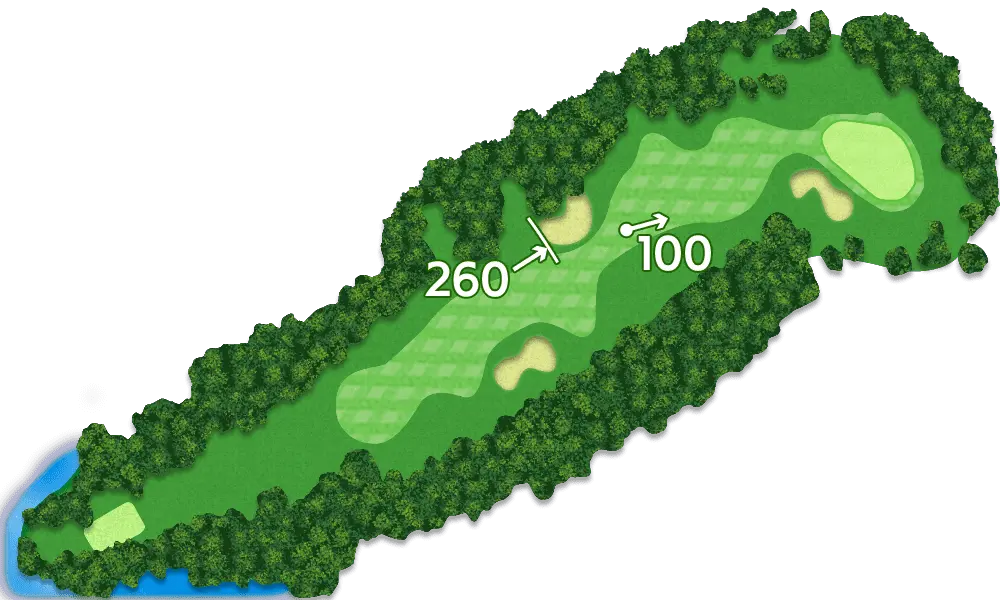
HOLE5 PAR 4
363 YARDS
A par-4 that doglegs to the right along a pond on the right. Aim your tee shot toward the two fairway bunkers visible straight ahead. From the fairway, you can use the approach path to target the green.
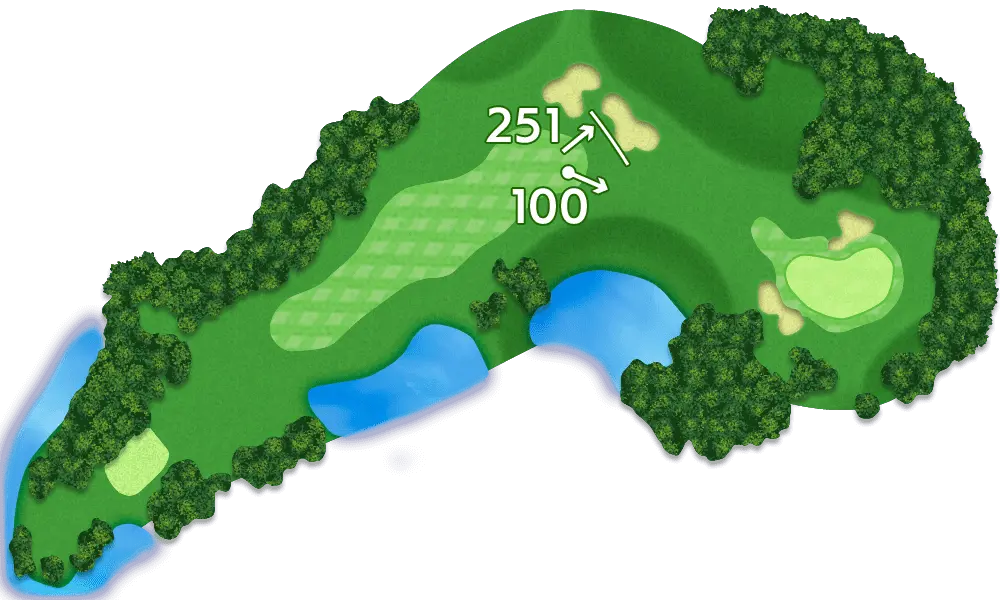
HOLE6 PAR 4
361 YARDS
A par-4 that doglegs slightly to the left, with a pond on the right side and just in front of the green. The key is hitting a precise tee shot.
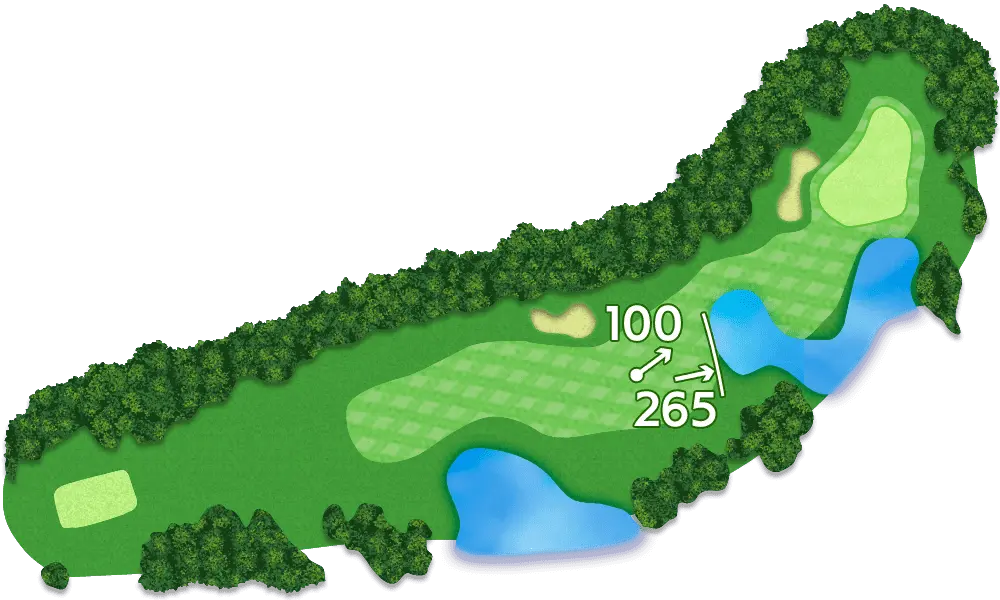
HOLE7 PAR 4
329 YARDS
A short but highly strategic par-4.A right dogleg with the green located beyond the pond on the right. A deep bunker lies just in front of the right side of the green, making the distance and direction of the tee shot critical.
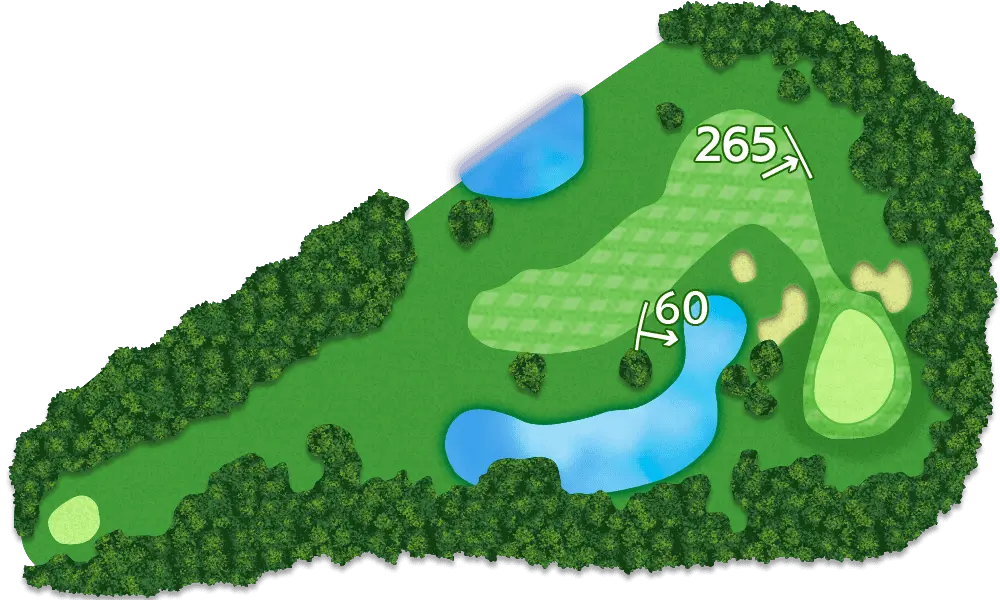
HOLE8 PAR 3
172 YARDS
A par-3 with a pond stretching out in front of the right side of the green. The green is deeper on the left side and features complex undulations; if the pin is in the far left corner, landing the ball too close to the front of the green makes a three-putt likely. If the pin is on the right, be careful as the pond extends far to the right.
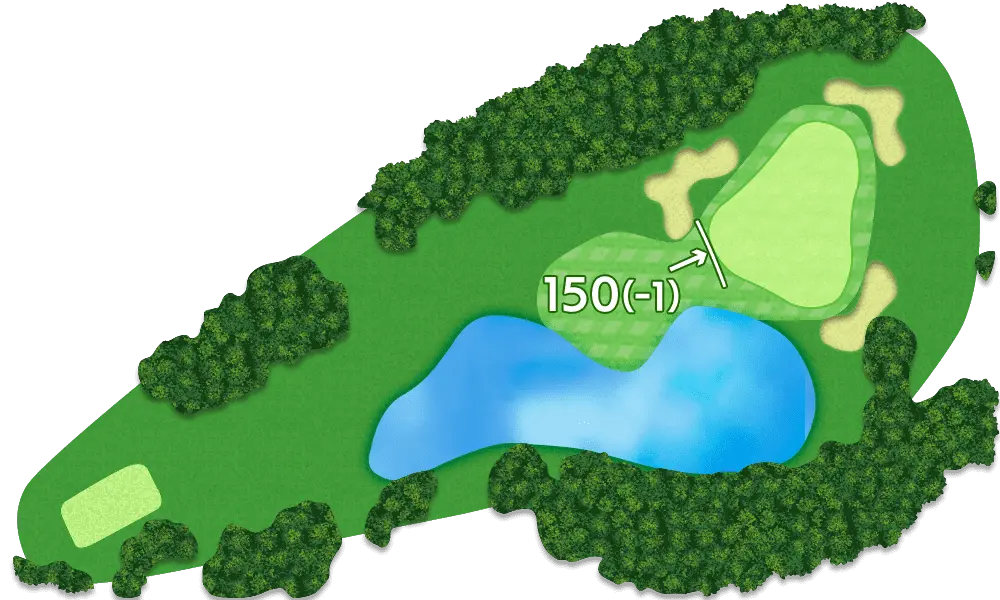
HOLE9 PAR 5
537 YARDS
A par-5 that doglegs to the right from the second shot. If you hit your tee shot too far to the right, the trees ahead will obstruct your second shot, leaving you with a long third shot. The key is to hit your tee shot slightly to the left and keep your second shot on the fairway.
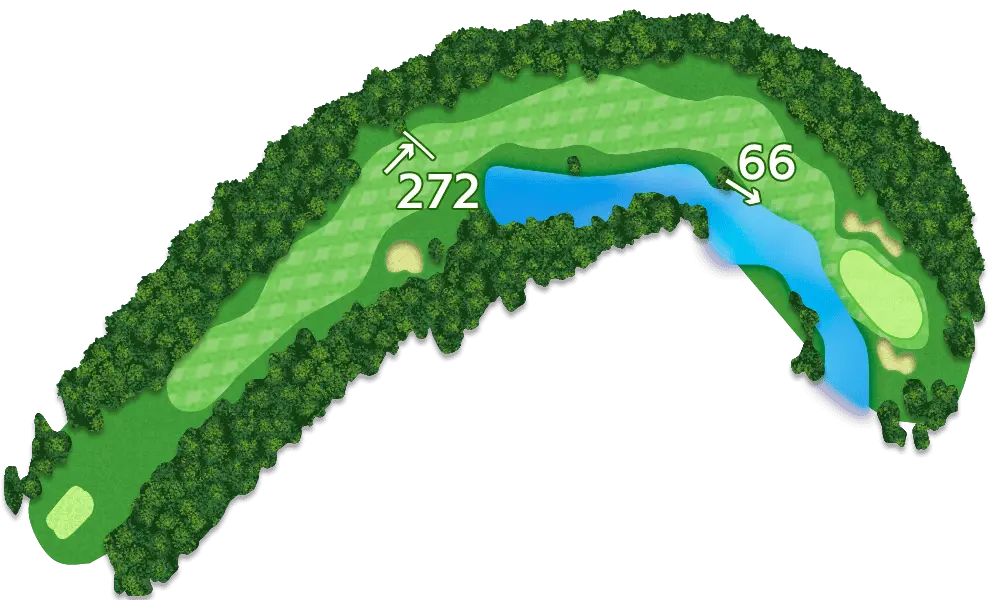
HOLE10 PAR 4
416 YARDS
A flat par-4 with a slight dogleg to the right. Since a fairway bunker and trees on the right side block any shortcuts, aim your tee shot toward the left side of the fairway. The green has complex undulations, so be careful not to three-putting.
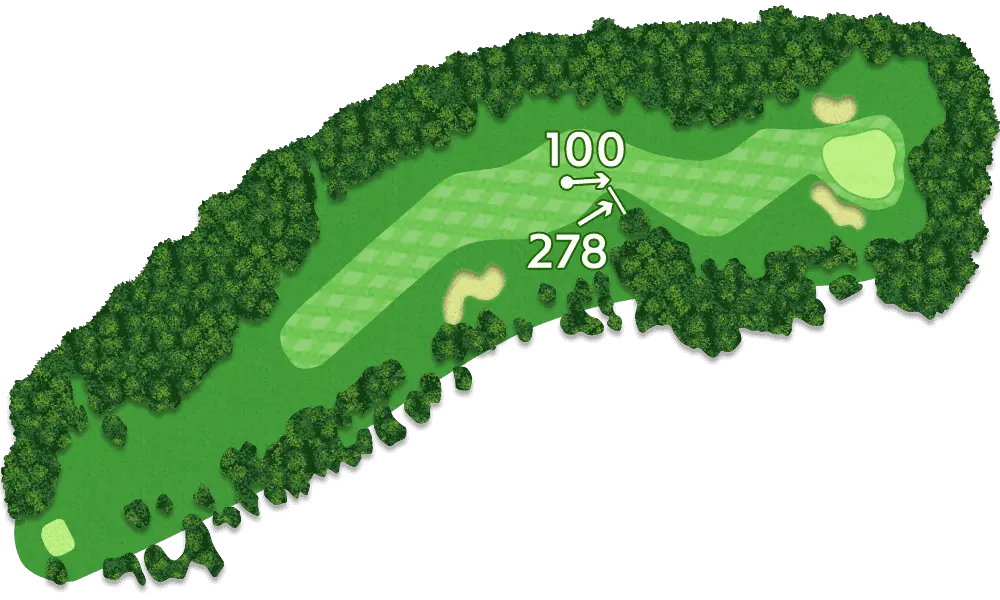
HOLE11 PAR 4
375 YARDS
A par-4 that doglegs gently to the left.If you are too cautious about the pond in front of the green, your ball is likely to end up in the fairway bunker on the right or in the woods, so it's important to choose your target based on your driving distance. The green is long from front to back and slopes down toward the pond.
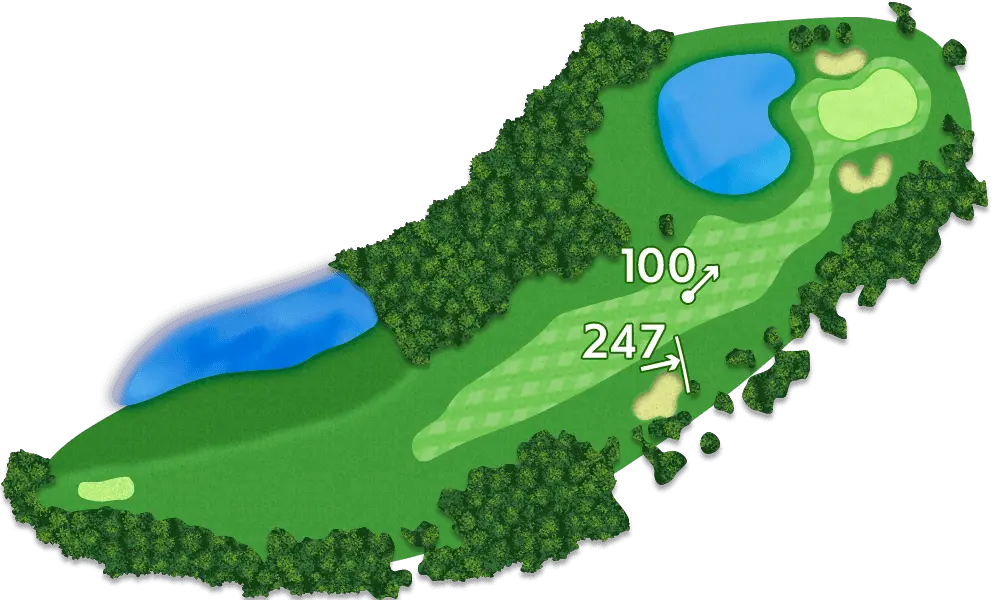
HOLE12 PAR 5
520 YARDS
A par-5 with a pond stretching along the left side starting 100 yards before the green. The third shot requires clearing the pond, and a deep bunker lies in wait just in front of the wide, elongated green.Since the green slopes downward, you'll want to take a bold shot and aim directly at the pin.
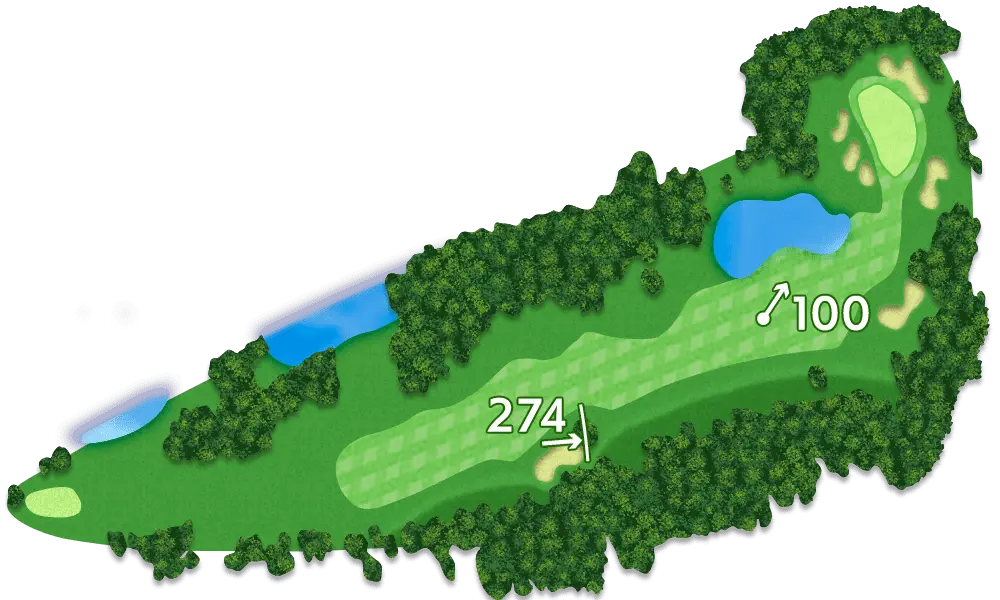
HOLE13 PAR 3
164 YARDS
A par-3 with a long, narrow, horseback-shaped green flanked by guard bunkers on both sides. However, what makes this hole most challenging is the wind that blows through. You may not feel the wind on the tee box, but once you hit the ball, it's often affected by the wind.
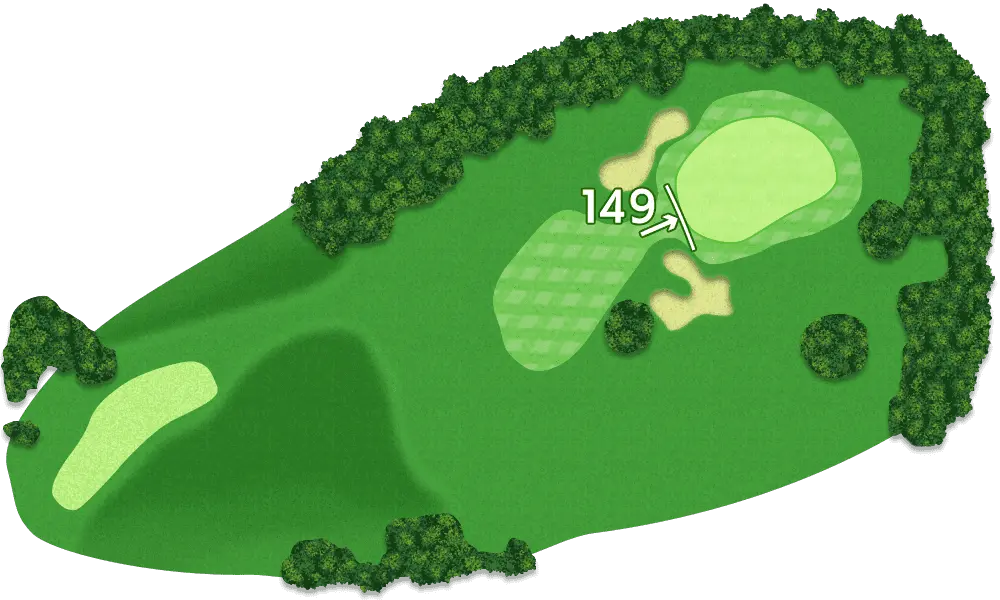
HOLE14 PAR 4
393 YARDS
A short par-4 that appears wide overall, but the fairway is limited to the right half, while the left half is rough and sits a level lower. Aim your tee shot at the right side of the fairway, but be careful-the woods on the right are close by. The green slopes steeply toward the back, making side-to-side putts difficult.
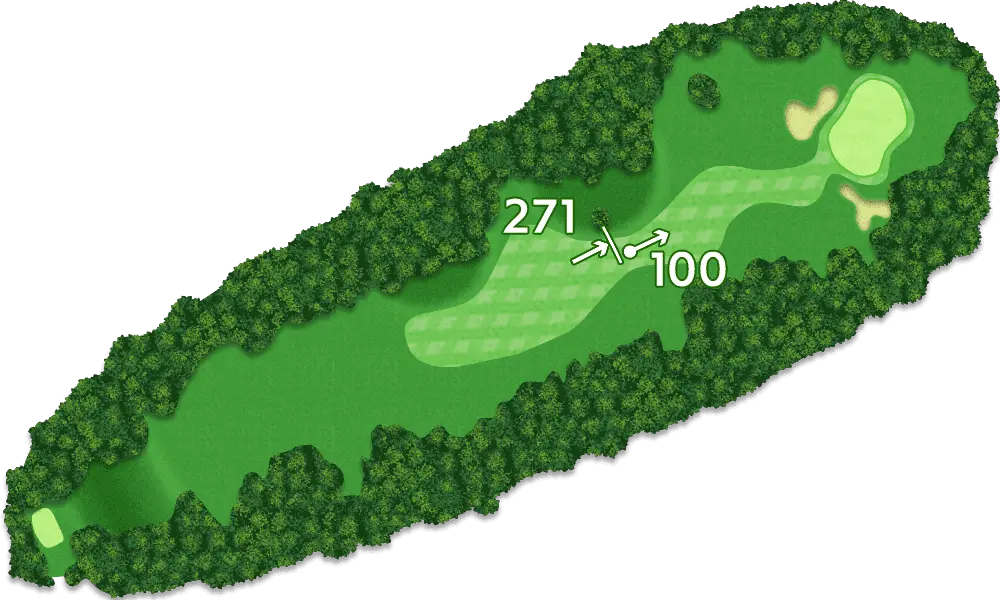
HOLE15 PAR 4
410 YARDS
A right-dogleg par 4. The fairway slopes to the left, so if you play it safe by aiming your tee shot left to avoid the bunker on the right, you'll end up in the rough. Long hitters should aim to clear the fairway bunker on the right.
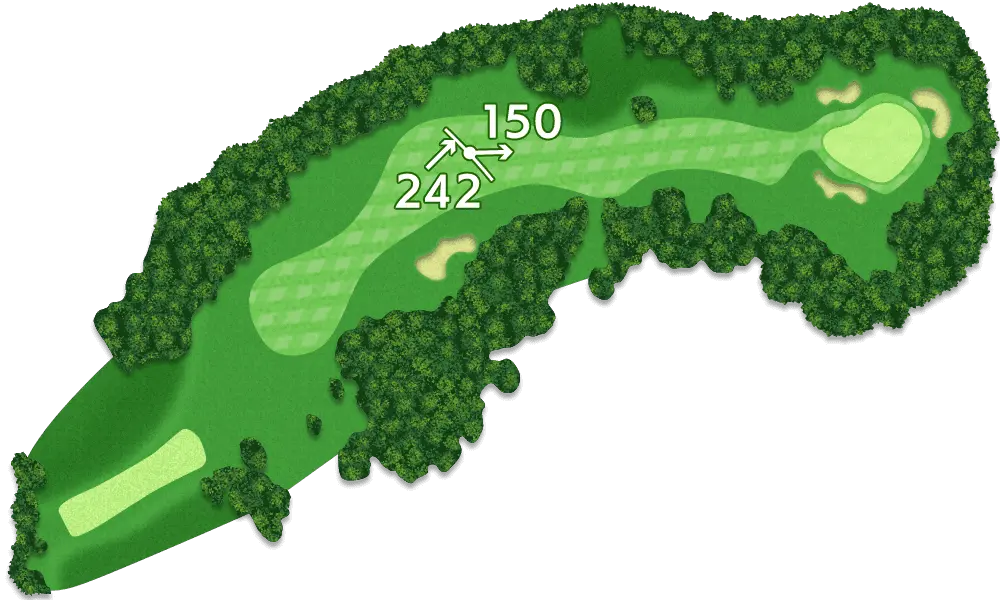
HOLE16 PAR 3
177 YARDS
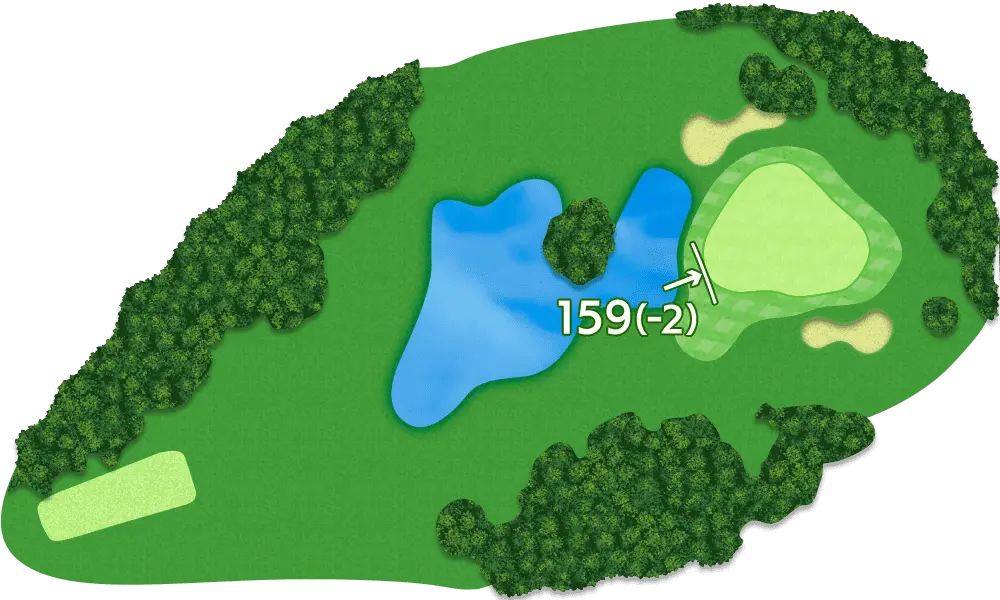
A par-3 with a large pond stretching out in front of the green. Due to the pond and the large green, the hole appears shorter than it actually is, but the wind blowing from the back right of the green often makes it difficult to reach the green.
HOLE17 PAR 5
470 YARDS
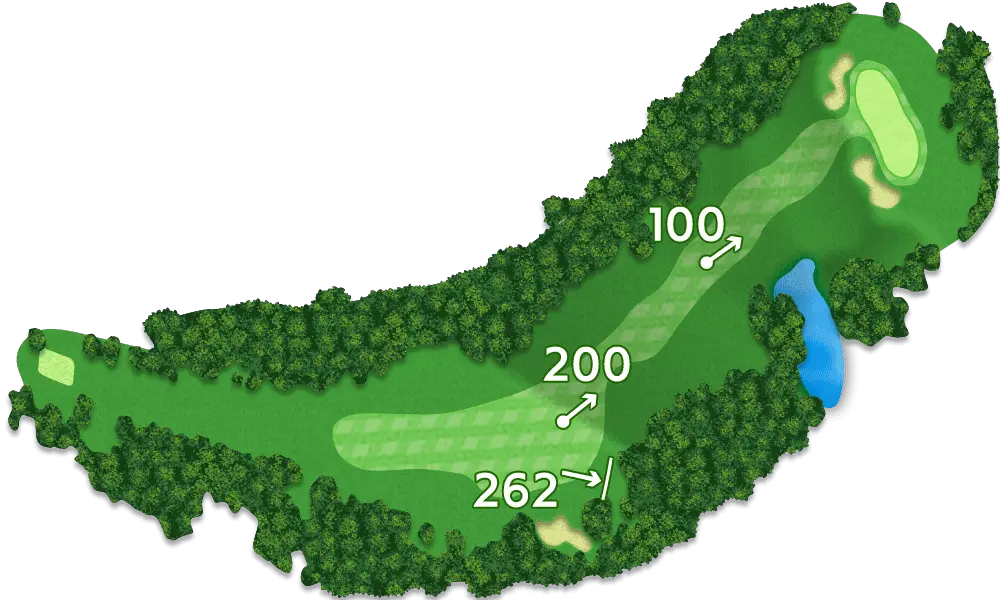
A left-dogleg par-5. From the second shot location, the course slopes gently downhill, but the area from near the pond on the right to the green is uphill.The safe strategy is to hit your tee shot toward the right side of the fairway and then play your second shot toward the left, but if you take a bold approach with your tee shot, reaching the green in two is possible.
HOLE18 PAR 4
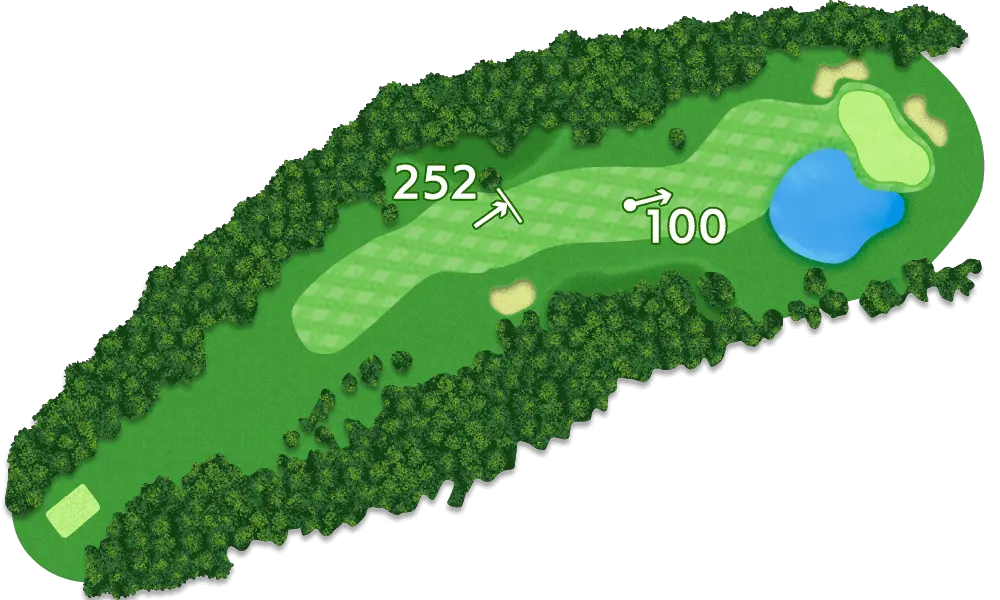
424 YARDS
A par-4 that curves gently to the right, with a beautiful pond stretching out just before the green. The left side of the fairway slopes downward, making it easy for the ball to roll into the lower rough. If you're not confident about clearing the pond on your second shot, aim for the fairway on the left side.
- TOTO JAPAN CLASSIC Convention Secretariat
- tjc@mbs.co.jp